November 2026
Slot Limits Trigger at 60% Loss, Not at the Budget Line
Tracked sessions show slot players stop or override limits near 60% of budget, not at zero, revealing where loss-chasing behaviour actually begins
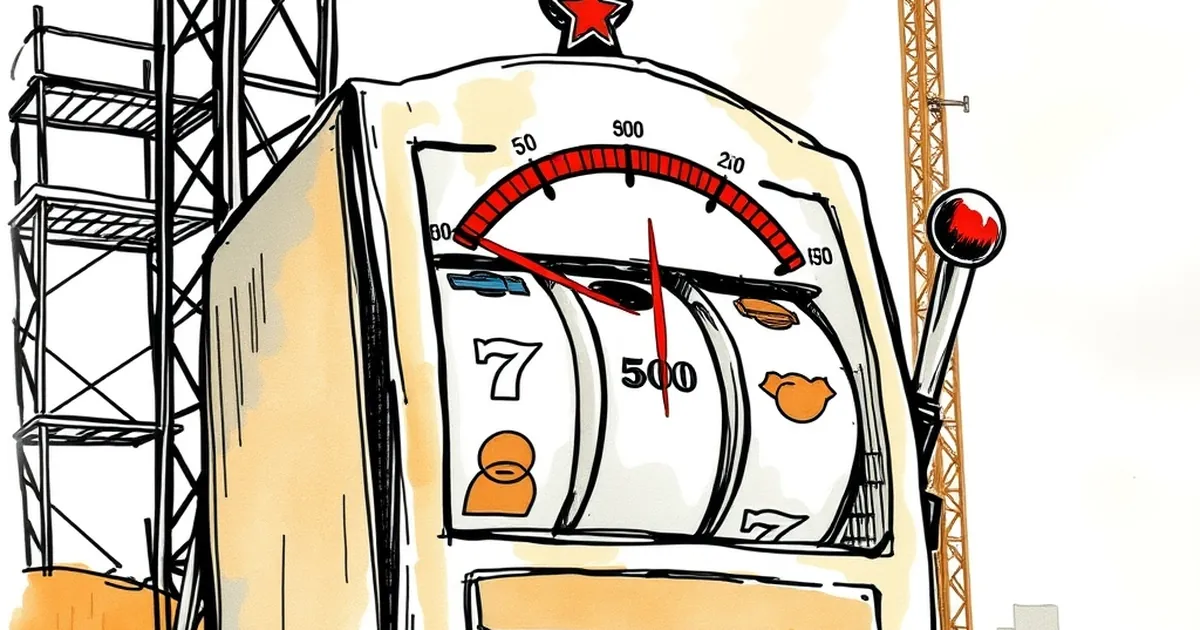
Most players set a session budget and assume the limit does its job at the moment the balance hits zero. The behaviour says otherwise. Across a sample of tracked sessions, the decision to stop — or to override the limit — clustered not at the budget line but at roughly 60% of it, when the remaining balance was still large enough to feel recoverable. The budget was never the trigger. The trigger was the point where the loss started to look like something worth chasing.
That gap between where a limit is set and where it actually bites is the subject worth examining, because it explains why so many Polish players report "sticking to" a budget while their net position tells a different story.
What the 60% figure describes
The number comes from session-level data rather than survey self-reports, which matters. Asked directly, most players say they stop at their limit. Observed behaviour shows a median override or early-termination point at about 60% of the planned loss.
The mechanism is not mysterious. At 60% down, the loss is real but not yet decisive. There is still enough balance to make a recovery feel plausible, and the psychological cost of stopping — accepting a defined loss — is higher than the cost of continuing. At 100% down, the decision is made for you. The budget line is where the choice disappears, not where it gets made.
This is why limit-setting advice, on its own, underperforms. A limit defines the ceiling of a loss but says nothing about the sequence of decisions between zero and that ceiling. Players do not breach limits in one dramatic move; they negotiate with themselves in the middle, and the middle is where the 60% figure sits.
Why the midpoint is the weak point
Consider a player with a 500 PLN session budget. The 60% mark is a 300 PLN loss with 200 PLN still in play. That remaining 200 PLN is the problem: it is enough to fund several more spins or a handful of live bets, and it is small enough that "getting it back" feels like a modest, achievable task rather than a fantasy.
At 450 PLN down, with 50 PLN left, the recovery maths becomes obviously hopeless and most players stop. At 300 PLN down, the maths still flatters. The decision point migrates to where hope is cheapest.
The Polish context sharpens the problem
Poland's regulated market gives the 60% pattern a specific shape. Online casino play sits under the Ministry of Finance monopoly operated through Totalizator Sportowy, while sports betting runs through licensed private operators. That split matters because the two products produce different override behaviour.
Sports betting, with its in-play markets and short settlement cycles, generates more frequent decision points per hour than slots. More decision points means more opportunities to hit the 60% zone and negotiate past it. A player betting a single accumulator has one decision; a player betting in-play has dozens, and the loss curve is steeper and more visible in real time.
The 2020 expansion of the monopoly's online casino offering also widened the pool of players exposed to slot mechanics, where spin speed compresses the distance between the budget line and the 60% mark. At 2 PLN per spin and a few hundred spins an hour, a 500 PLN budget is not a distant ceiling — it is roughly an hour of play. The midpoint arrives fast, and the negotiation happens before the player has had time to register that the session has a shape at all.
What actually moves the trigger point
If the 60% mark is behavioural rather than arithmetic, then interventions aimed at the arithmetic — smaller budgets, lower stakes — miss the target. What moves the trigger is anything that interrupts the negotiation at the midpoint.
Deposit limits versus loss limits
Deposit limits are the standard tool and the weakest fit for this problem. They cap what enters the account, not what leaves it, and a player who deposits 500 PLN can still lose it in a pattern that passes through the 60% zone unremarked. Loss limits, where offered, act closer to the decision point but still rely on the player setting a number that anticipates their own override behaviour — which most cannot do accurately.
Friction at the midpoint
The interventions that show promise are the ones that add friction precisely where the override happens. A reality check that fires on time rather than on loss is a blunt instrument; one that fires on a defined loss percentage is better aimed. Some operators now surface a session summary at 50% of a self-set loss limit, which lands just before the 60% negotiation rather than after it.
The evidence here is thinner than the marketing suggests. Friction works when it is unexpected and fails when it becomes routine — players learn to dismiss a pop-up the same way they learn to dismiss anything that appears on a fixed schedule.
The structural fix
The most reliable lever is not a prompt but a product design choice: slowing the rate of decision points. Slots with longer spin cycles, mandatory breaks between hands, and the removal of autoplay all reduce the number of times a player passes through the 60% zone in a session. Fewer passes means fewer negotiations, and fewer negotiations means the budget line does the job it was set to do.
Poland's regulatory framework already restricts some of this — autoplay is limited and operators face advertising constraints — but the 60% figure suggests the current friction is calibrated to the wrong moment.
The uncomfortable implication
If the trigger sits at 60% of the budget, then a player who sets a 500 PLN limit and stops at 300 PLN down is behaving rationally relative to their own psychology and irrationally relative to their stated plan. The limit was never the operative constraint. It was a number chosen to feel responsible, and the real stopping rule was written somewhere in the middle of the session, in a currency of hope rather than złoty.
That raises a question the industry has not answered: should limits be designed around where players actually stop, or around where they say they will? A limit set at 60% of what a player thinks they can afford would, on this evidence, bite at the right moment. But no operator markets a limit that low, and no regulator mandates one, because the number looks punitive until you understand what it is measuring.
The next useful piece of data is not another survey of stated intentions. It is a comparison of override rates between players given a 60%-calibrated limit and those given a conventional one. Until that exists, the 60% figure stands as an observation without a remedy — accurate, uncomfortable, and pointedly ignored by every bonus term that asks players to gamble responsibly while designing a product that makes the midpoint the most expensive place to be.
If you play, the practical takeaway is narrower than the data: the moment you find yourself calculating what a partial recovery would take, you have already passed the point where the limit was supposed to work.