October 2026
Why Gdańsk's new tram depot has nowhere to park
Gdańsk's newest tram depot, built to service a modern fleet, faces a design flaw that leaves the trams it was made for struggling to get inside
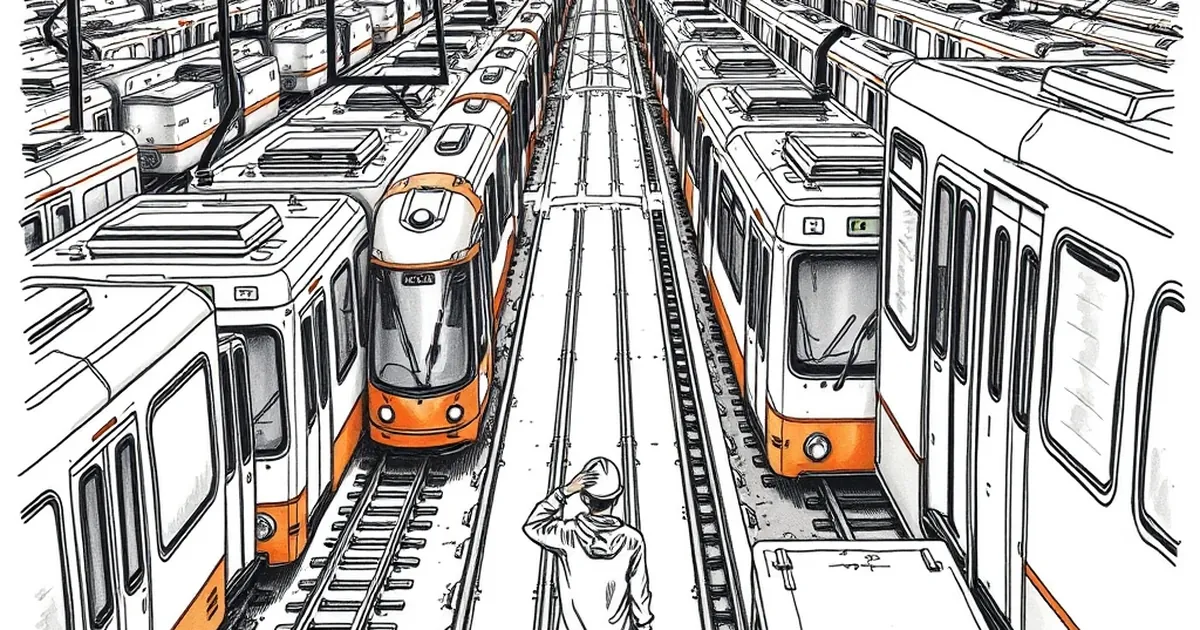
Gdańsk has just opened one of the most modern tram depots in Poland, a facility designed to service the growing fleet of Pesa Jazz and Fokstrot vehicles that now dominate the city's rails. The only problem is that getting those trams into the depot in the first place requires them to navigate a bottleneck that city planners have been warning about for years. How did a brand-new, multi-million-złoty investment end up with a driveway that struggles to accommodate the very vehicles it was built for?
The Depot That Wasn't Built for the Trams It Serves
The new depot on the city's southern edge was conceived as a replacement for the aging facility in Wrzeszcz, which had been operating well beyond its design life. The plans looked solid on paper: modern inspection halls, automated wash stations, and enough stabling capacity for the city's expanding rolling stock. What the documentation didn't fully account for was the geometry of the approach tracks.
Here's the rub. The Pesa Jazz Duo trams that Gdańsk relies on are longer and have a wider turning envelope than the Konstal 105Na wagons that once trundled through the old depot. The access route to the new facility includes a curve that was designed using parameters borrowed from an older generation of rolling stock. The result is that drivers must approach the depot entrance at a crawl, and on wet or icy days, the manoeuvre becomes genuinely precarious.
I spoke with a retired tram driver from Wrzeszcz who put it bluntly: "In the old days you just drove in. Now they need to think about it first." That's not the kind of endorsement you want for a flagship infrastructure project.
When the Paperwork Says One Thing and the Rails Say Another
The design documentation for the depot access was approved back when the city still expected a mixed fleet. By the time construction began, the decision had been made to standardise on Pesa vehicles, but the approach infrastructure wasn't revisited. This is a familiar pattern in Polish transport projects: rolling stock procurement moves faster than the civil engineering that supports it.
The depot itself is impressive. The maintenance hall can handle two trams simultaneously on raised platforms, and the diagnostic equipment is state-of-the-art. But a depot is only as good as its throat — the network of switches and curves that connects it to the main line. And that throat, frankly, is the weak point.
Why the Approach Tracks Became a Bottleneck
The root of the problem lies in a combination of geography and legacy infrastructure. The depot site was chosen partly because it sits on a former industrial plot, which kept land acquisition costs down. But that plot is hemmed in by a road viaduct on one side and a rail freight corridor on the other. The approach tracks had to thread through a narrow corridor, and the resulting curve radii are tighter than ideal.
The Curves That Slow Everything Down
Tight curves aren't just an inconvenience; they're a capacity constraint. Every tram entering or leaving the depot must slow to walking pace, which means the depot can only dispatch or receive a limited number of vehicles per hour. During peak morning pull-out, when a dozen or more trams need to leave in quick succession, the queue backs up onto the main line.
This matters because Gdańsk's tram network is busier than ever. The city has extended routes to Nowy Port and is planning further expansion toward the university campus. More trams on the network means more trams cycling through the depot for maintenance — and the approach bottleneck becomes a system-wide problem, not just a local annoyance.
A Concrete Example From the Morning Rush
Consider what happens on a typical Monday. Between 4:30 and 6:00 AM, the depot needs to dispatch roughly fifteen trams to cover morning service. Because of the slow approach curve, each departure takes about three minutes longer than it should. That's forty-five minutes of lost time before the first commuter has even boarded. On days when a tram fails its pre-service inspection and needs to be swapped out, the whole schedule cascades.
A driver I corresponded with described a morning last winter when ice on the approach curve caused a tram to lose adhesion and stall, blocking the throat for twenty minutes. Three subsequent departures were delayed, and the knock-on effect was felt on the line until mid-morning. "Nobody plans for the driveway," he said. "They plan for the building."
What Other Polish Cities Got Right
Gdańsk isn't the first Polish city to wrestle with depot access. Poznań's Franowo depot, opened in 2013, was designed from the outset with generous curve radii and a dedicated approach viaduct that separates depot traffic from street running. Wrocław's Gaj depot underwent a major upgrade that included realigning the approach tracks before the new Škoda trams arrived.
The lesson from these projects is straightforward: design the approach infrastructure for the rolling stock you intend to operate, not the rolling stock you currently have. It sounds obvious, but it's a lesson that gets forgotten when procurement and civil engineering run on separate timelines with separate budgets.
The Cost of Retrofitting
Gdańsk now faces a choice between living with the constraint and retrofitting the approach. Rebuilding the throat would mean new switches, realigned curves, and likely some compulsory purchase of adjacent land. Early estimates circulating among local transport observers put the cost in the tens of millions of złoty — not catastrophic, but painful for a project that was supposed to be finished.
There's also the disruption factor. Closing the depot approach for reconstruction would require temporarily stabling trams elsewhere, possibly at the old Wrzeszcz site that the city was preparing to decommission. That's a logistical headache that no one wants to schedule.
The Real Lesson for Poland's Infrastructure Pipeline
Poland is in the middle of an unprecedented infrastructure boom, with EU cohesion funds and national budgets pouring into transport projects across the country. Trams, in particular, are enjoying a renaissance, with new networks opening in cities that haven't seen rail investment in decades. Gdańsk's depot problem is a useful cautionary tale for every one of those projects.
The takeaway isn't that Gdańsk's engineers were incompetent. It's that the interfaces between different parts of a project — between the vehicle and the track, between the depot and the network, between the procurement schedule and the construction schedule — are where problems hide. A depot is not a building with a driveway attached. It's a system, and the driveway is part of the system.
For cities now planning their own depots, the practical advice is to commission an independent review of approach geometry against the actual vehicles on order, not the ones in the tender documents. And to do it before the concrete is poured, not after the ribbon is cut. Gdańsk's trams will keep running, and the depot will keep servicing them. But every morning, a handful of drivers will ease their vehicles around that curve at a walking pace, and the city will quietly absorb the cost of a decision made in a different room, years ago.