September 2026
What Happens When a Polish Bypass Opens Ahead of Schedule
Opening a bypass ahead of schedule triggers economic, legal, and planning consequences that few outside the industry ever consider
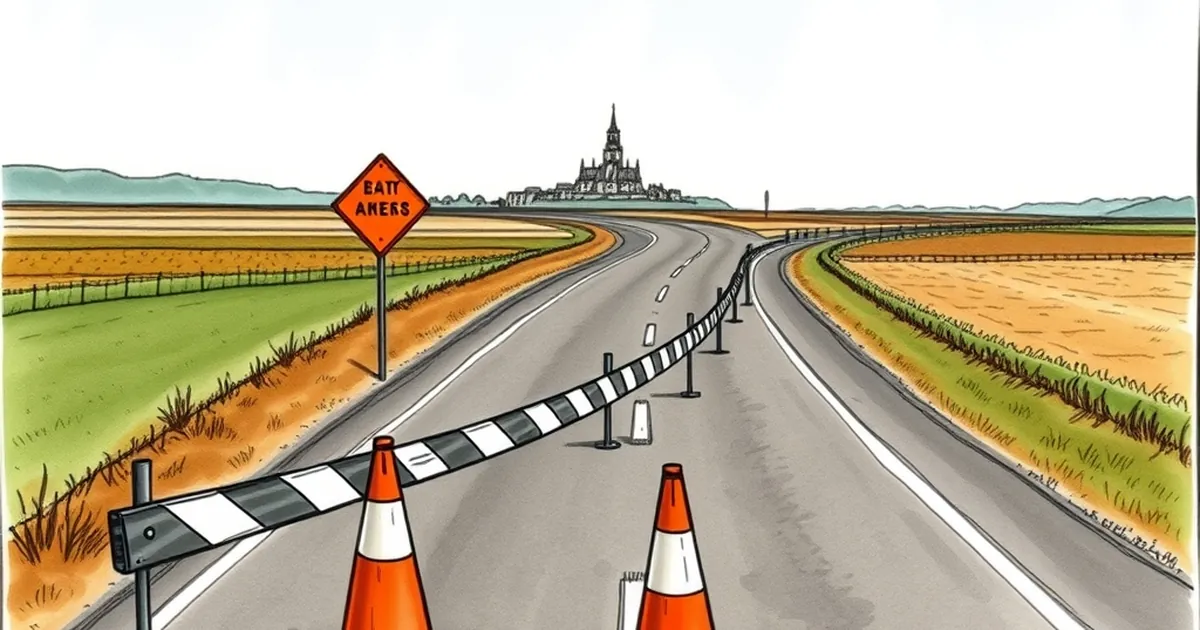
When the S61 expressway's final stretch near Ełk opened to traffic in the autumn of 2022, drivers on the old DK16 through the town centre noticed something unusual: the congestion simply evaporated overnight, weeks before anyone had planned for it. Contractors had finished ahead of the contractual deadline, and the road authority flipped the switch early. That single decision — opening a bypass before its official handover date — sets off a chain of consequences that few people outside the industry ever stop to consider.
The Economics of an Early Opening
A finished bypass sitting idle behind temporary barriers is one of the most expensive sights in Polish infrastructure. Every month a completed road stays closed, the General Directorate for National Roads and Motorways (GDDKiA) is still paying for supervision, security, and maintenance of a facility that generates zero benefit. So when a contractor signals early readiness, the calculation is rarely sentimental.
The math is straightforward. A bypass that removes 15,000 vehicles a day from a town centre cuts fuel consumption, travel time, and accident risk immediately. For a town like Ełk or Nowy Sącz, where heavy trucks once queued past primary schools, the public health dividend starts the same morning the barriers come down.
There is also a contractual dimension. Polish road contracts typically include bonus clauses for early completion — often a fraction of a percent of contract value per day saved, capped at a ceiling. A contractor who finishes three months early can collect a meaningful bonus while the treasury still comes out ahead, because the state avoids months of duplicated costs.
Who Actually Wins
Local businesses on the old route often lose. Petrol stations, roadside bars, and motels that survived on transit traffic can see revenue drop by a third within weeks. I have spoken with owners along bypassed stretches of DK8 who described the first six months as "a slow bleed." Municipalities rarely plan for this, and it is one of the least discussed side effects of fast road delivery.
Traffic Doesn't Just Move — It Reorganises
Drivers are not water finding the same channel. When a new bypass opens, the entire local network reshuffles within days, and the results are not always what the models predicted.
The Rat-Run Surprise
Traffic models assume drivers will use the new road because it is faster. In practice, a portion of local traffic — people going three kilometres, not thirty — keeps using the old route because the bypass entrance adds a detour. Meanwhile, a different group discovers that formerly clogged streets are now empty and starts using them as shortcuts. Villages just outside the bypass interchanges sometimes see traffic increase, not decrease.
This is why GDDKiA now routinely monitors traffic counts for six to twelve months after an early opening, not just at the official handover. The data collected in that window frequently feeds back into the design of subsequent projects.
The Safety Adjustment Period
New roads have a documented accident spike in their first months. Drivers misjudge new junctions, treat a fresh dual carriageway as a racetrack, or simply do not yet know where the exits are. An early opening compresses the period when signage, lighting, and markings are still being fine-tuned, which raises the stakes.
One concrete example: when a section of the S7 near Radom opened ahead of schedule, the first weekend brought a cluster of collisions at a single newly configured intersection. The cause turned out to be a temporary marking scheme that contradicted the permanent signage. It was fixed within days, but it illustrated how an early opening shifts the debugging phase from the drawing board to live traffic.
The Political and Bureaucratic Ripple
An early opening is never just an engineering event. It is a political one, and everyone involved knows it.
For the ruling party of the day, a ribbon-cutting before an election is worth more than one after it. That creates pressure to declare readiness slightly before every last metre of fencing, drainage, and landscaping is finished. In practice, this means early openings often come with a punch list — outstanding cosmetic and minor works completed under temporary traffic arrangements.
For local government, an early opening forces immediate decisions about the old road. Who maintains it now? Does the town convert the freed-up capacity into parking, bus lanes, or a pedestrian zone? Towns that move quickly — like several along the former DK1 corridor — capture the benefit. Towns that wait two years usually end up with a wider road carrying the same local traffic and no new public space.
The Contractor's Calculus
Contractors are not altruists. Finishing early costs money: extra crews, overtime, night shifts, accelerated material deliveries. They do it when the bonus, the freed-up bonding capacity, or the reputational gain for future tenders outweighs the cost. On large Design-Build contracts, moving crews to the next project three months early can be worth more than the bonus itself.
This is why early openings cluster in specific circumstances: smaller, simpler sections, favourable weather, and contractors with a healthy pipeline of upcoming work.
What It Means for the Next Project
The real lesson from Poland's wave of early road openings is that delivery speed is now a competitive variable, not a fixed constraint. Contractors bid on it, politicians campaign on it, and drivers feel it immediately.
But speed also transfers risk downstream. The faster a road opens, the more of its shakedown happens in public view. The towns that handle this best are the ones that treat an early opening as the start of a planning process, not the end of one — updating local traffic management, redesigning the old road, and pressing GDDKiA for the monitoring data that shows what actually happened on the ground.
If you live near a bypass that is nearing completion, watch the first ninety days closely. That is when the real story of the road gets written — and it rarely matches the press release.