November 2026
Recycled ballast gets a second life before the quarry does
Poland's worn rail ballast is being reclaimed and reused instead of dumped, revealing the quiet economics and engineering behind giving old stone a second life
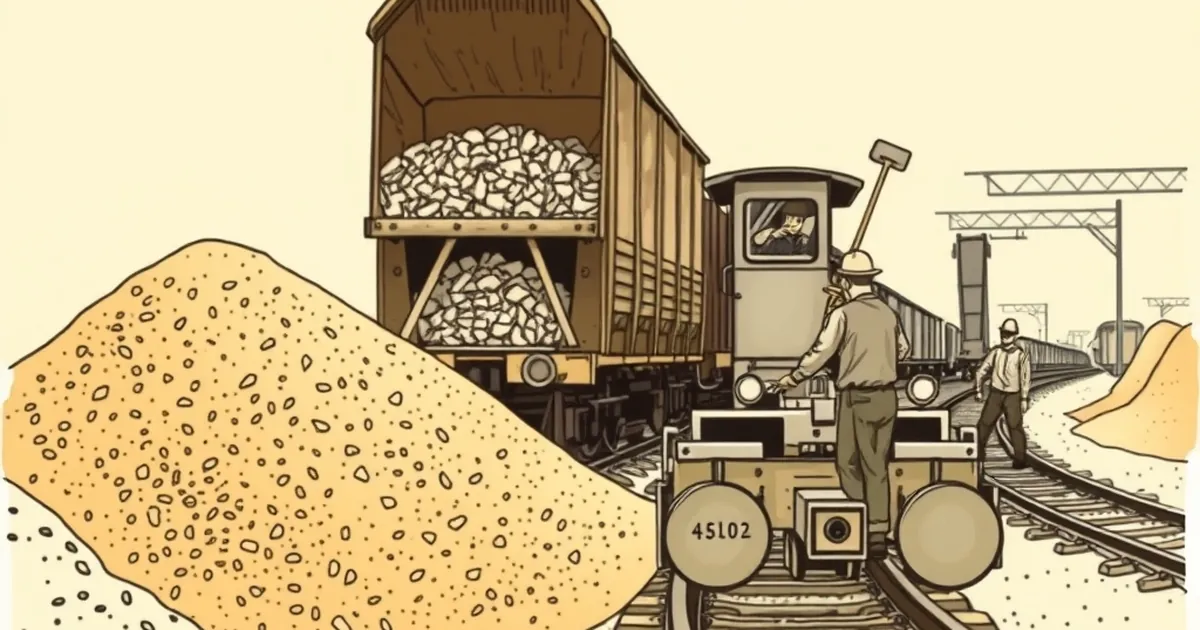
Poland's rail network swallows millions of tonnes of crushed stone every year, and until recently most of it ended up as embankment filler once it wore out. That's a strange fate for granite that took a quarry, a crusher and a diesel-hungry haul to produce. So why is recovered ballast only now being treated as a resource rather than waste — and what does it take to put it back under the sleepers?
The quiet economics of stone that's already on site
Ballast is the unsung hero of railway engineering. It spreads load, drains water and holds the track geometry in place while withstanding decades of freeze-thaw cycles and pounding from trains. But it doesn't last forever: fines migrate into the voids, the shoulder clogs, and eventually the track needs reballasting.
Traditionally, that meant stripping the old stone, trucking it away and delivering fresh material from a quarry. PKP Polskie Linie Kolejowe has been rethinking this arithmetic, especially on major corridors where closures are expensive and every lorry movement adds cost and carbon.
The appeal of recovered ballast is straightforward. It's already at the track, it's already been paid for once, and it has a known geological pedigree. The catch, of course, is contamination — the very reason it was dug out.
What's actually in a pile of spent ballast
Spent ballast is a mix of sound stone, fractured particles, fines from abrasion, dust, and sometimes rubber or metal debris from braking and wear. The proportions matter enormously. A clean, well-graded granite can be reclaimed at high rates; a heavily fouled limestone may yield little worth keeping.
That's why modern ballast cleaning trains matter so much. Machines like those used by Polish contractors screen and separate material on track, returning usable stone to the shoulder while offloading the fines. It's an old idea, but the screening accuracy and process control have improved considerably.
From spoil heap to sub-ballast: the routes back to track
There are essentially three ways recovered ballast re-enters service, and they differ in complexity and value.
Direct reuse after screening
The cleanest path: screen, remove fines, re-grade, and put the stone back into the ballast layer. This works best where the parent rock is hard and durable — granite, basalt, greywacke — and where fouling is mostly fine particles rather than clay or organic matter. Quality control is the sticking point. You need gradation curves, fragmentisation testing and, ideally, freeze-thaw resistance data before the material goes back under a 200 km/h line.
Crushing into sub-ballast and drainage layers
Material that no longer meets ballast specs can still be crushed and used as sub-ballast or capping. This is where a lot of Polish recovered stone goes, and it's a genuinely sensible downgrade rather than a waste destination. The engineering demands are lower, and the volumes are large.
The road and concrete detour
Some material leaves rail entirely, becoming aggregate for road construction or, after processing, a feedstock for lower-grade concrete products. This is common across Europe, though transport distance is the killer — haul recovered stone 80 km and the environmental case starts to wobble.
A concrete example from the Wrocław corridor
Consider a reballasting project on a busy freight corridor near Wrocław, where a contractor set up a temporary screening operation beside the worksite rather than hauling everything to a distant quarry or landfill. Spent ballast went through a mobile plant, fines were separated for disposal, and the recovered stone was re-graded and reused on lower-speed sidings and approach tracks.
The numbers that matter here aren't glamorous: fewer lorry movements through nearby villages, less fresh quarry stone purchased, and a shorter closure window because material was available on site. Local residents noticed the difference in truck traffic before anyone published a sustainability report.
That's the pattern worth watching. Recycled ballast rarely wins on technical prestige — it wins on logistics.
The obstacles that keep good stone in the spoil heap
If reuse makes so much sense, why isn't it universal? Several practical barriers persist.
Specifications and caution
Railway standards are conservative for good reason. Engineers need confidence that reclaimed material will perform for decades under cyclic loading, and demonstrating that takes testing that costs money and time. In practice, many designers default to virgin ballast because it's simpler to justify on paper, even when recovered stone would pass.
Contamination and variability
Every pile of spent ballast is different. One section may be clean granite; the next may be fouled with clay from a drainage failure or laced with old timber fragments. Variability complicates quality assurance and can make contractors nervous about warranty exposure.
The landfill alternative is still cheap
In parts of Poland, sending material to landfill or selling it as low-grade fill remains the path of least resistance. Until disposal costs reflect the true environmental burden, recycling competes on an uneven playing field.
What to watch on Polish projects
The direction of travel is clear. As quarry permits become harder to obtain, haulage costs rise and carbon accounting creeps into tender evaluation, recovered ballast looks less like waste and more like inventory. The projects that get this right will be the ones that plan for material recovery from the start — siting screening plants sensibly, testing early, and writing reuse into the contract rather than bolting it on afterwards.
For anyone specifying track works in Poland, the practical move is simple: ask, before the first sleeper is lifted, where the old ballast is going and whether any of it could stay. The answer often reveals more about a project's real cost than the headline contract price.