October 2026
Rail Electrification Stops Where the Traffic Does
Why Poland's rail electrification ends where it does, and how freight economics and EU funding shape the map
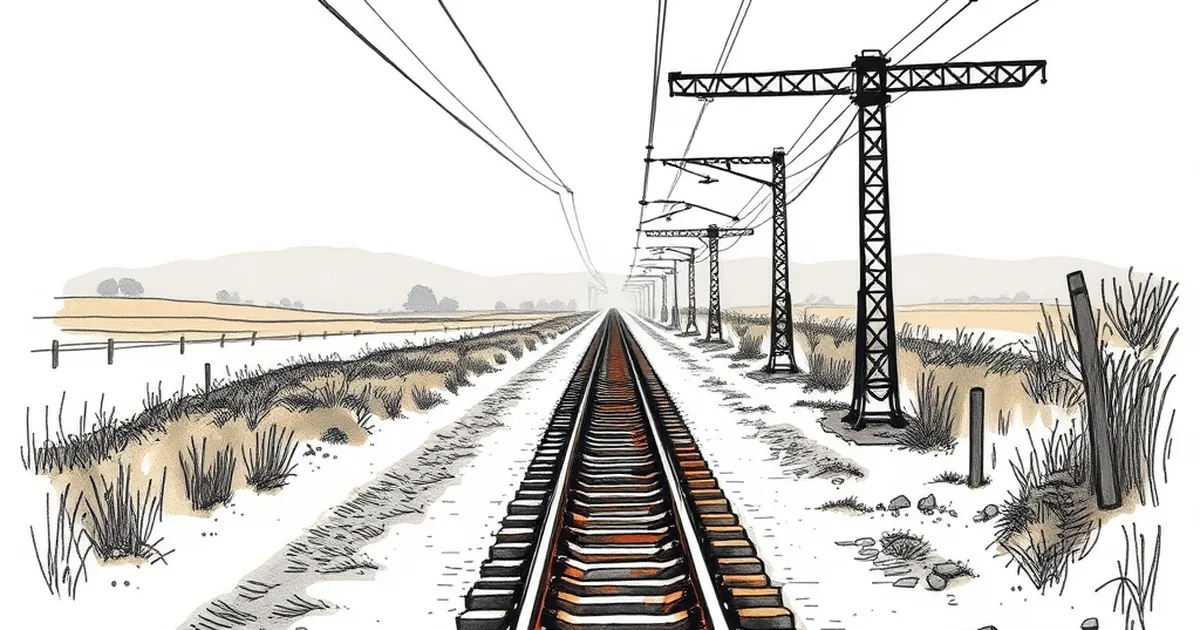
Poland's rail map has a colour-coding problem that few passengers notice and plenty of planners lose sleep over. Look at the network diagrams published by PKP Polskie Linie Kolejowe and you will see thick electrified corridors running between the big cities, then thin grey lines trailing off into the provinces where the overhead wires simply stop. Why does the current end exactly where it does — and is that boundary a technical accident, or a cold financial verdict?
The short answer is that electrification follows traffic, not geography. The long answer involves freight economics, EU funding cycles, and a stubborn fleet of diesel railcars that refuses to become obsolete.
The Economics of a Copper Wire
Electrifying a railway line is not a matter of stringing cable between poles. You need traction substations every 15 to 30 kilometres, a high-voltage feed from the national grid, reinforced bridges to carry the catenary, and signalling that can cope with the return current. On a single-track regional line, that package can cost several million zloty per kilometre before a single train benefits.
Against that, the savings are real but only materialise at volume. An electric train is cheaper to run per kilometre, accelerates faster, and requires far less maintenance than a diesel. The catch is utilisation. A line carrying four passenger pairs a day and one freight service will never repay the capital cost, no matter how you discount the cash flows.
That single ratio — trains per day against cost per kilometre — explains most of the Polish electrification map. The E20, E30 and E65 corridors, which carry the bulk of intercity passenger traffic and the majority of freight tonnage, were electrified decades ago. Lines like the 274 through Lower Silesia or the 131 through Silesia followed because coal and aggregates needed to move. Branch lines to small towns did not, and still have not.
Where the Freight Argument Wins
Freight is the quiet engine of electrification decisions. A single coal or container train can consume as much traction energy as dozens of passenger services, and freight operators pay track access charges that reflect it. When PKP PLK evaluates a line for modernisation, the freight forecast often tips the balance.
This is why some seemingly minor lines get wires while busier-looking regional routes do not. The Katowice–Gdynia coal corridor is a case in point: the tonnage justifies everything. A scenic line through a tourist region, packed in July and empty in February, does not.
The Diesel Island That Refuses to Shrink
Here is the awkward part. Poland still operates one of the largest diesel fleets in the European Union, and a significant share of the network — roughly a fifth of route kilometres — has no overhead line at all. The voivodeships that rely on these lines have learned to live with it.
Take the Świętokrzyskie region. For years, passengers on the Kielce–Busko-Zdrój route rode single-car diesel railcars built in the 1980s, with no electrification on the horizon. When the region wanted to improve the service, it did not wait for wires. It bought new diesel multiple units and refurbished the track instead. The result was a faster, cleaner service at a fraction of the cost of full electrification.
That decision is being repeated across Poland, and it is not a failure. It is a rational allocation of scarce regional funds.
Hybrids and Batteries Change the Arithmetic
What is genuinely new is the technology. Battery-electric and hybrid trains, already running in Germany and parts of Scandinavia, can cover 80 to 120 kilometres on a charge and recharge under existing wires. That means a line does not need continuous electrification — it needs electrified sections at the ends and enough charging time at termini.
For Poland, this is potentially transformative. A route like Łódź–Sieradz or parts of the Podlaskie network could be served by battery units using the electrified trunk at each end. The capital cost drops dramatically, and the diesel island shrinks without a single new substation.
The catch is the fleet. Battery trains are expensive to buy, and Poland's rolling stock procurement has historically been slow and politically tangled. The technology is ready; the tenders are not.
Why Some Lines Will Never See a Wire
It is worth being blunt about this. There are lines in Poland where electrification will never make sense, and pretending otherwise wastes public money.
Consider a 40-kilometre branch serving three villages with a combined population of 9,000, running two trains each way per day. Even with optimistic ridership growth, the electrification cost per passenger would run into hundreds of zloty. A modern diesel railcar, or a light rail solution, delivers the same service for a tenth of the investment.
The smarter play, which some voivodeships have already adopted, is to treat these lines as feeders rather than through routes. Timetable them to connect with electrified trunk services at a junction, and let passengers change trains. It is less romantic than a direct service, but it is honest about what the traffic supports.
The Maintenance Trap
There is also a maintenance argument that rarely makes headlines. Overhead line equipment needs inspection, vegetation control, and substation upkeep for the life of the line. A lightly used electrified branch can cost more to maintain than the diesel service it replaced, especially when the traffic forecast that justified it never materialises.
I have spoken to engineers who quietly admit that a handful of Polish electrification projects from the 1970s and 1980s now look questionable. The wires are there, the substations are there, and the trains are not. Nobody is proposing to remove them, but nobody is rushing to repeat the mistake either.
What to Watch Next
The next five years will be decided less by ideology than by two practical questions: how fast can PKP PLK spend the EU cohesion funds already allocated to rail, and how quickly can the regions procure battery or hybrid rolling stock?
If both move, Poland could shrink its diesel island substantially without electrifying a single marginal branch. If either stalls, the map will look much the same in 2030 as it does today — thick lines where the traffic is, grey lines where it is not, and a fleet of ageing railcars holding the whole thing together.
For passengers, the practical takeaway is simple. Check what actually runs on your line before assuming electrification is coming. The wires follow the trains, not the other way around — and in Poland, that rule has held for seventy years.