November 2026
Polish Players Lose 31% of Live Bet Slips to Stream Delay
A Warsaw trading desk finds 31% of Polish live bet slips are lost to stream delay, costing punters on nearly 1.4 million in-play bets
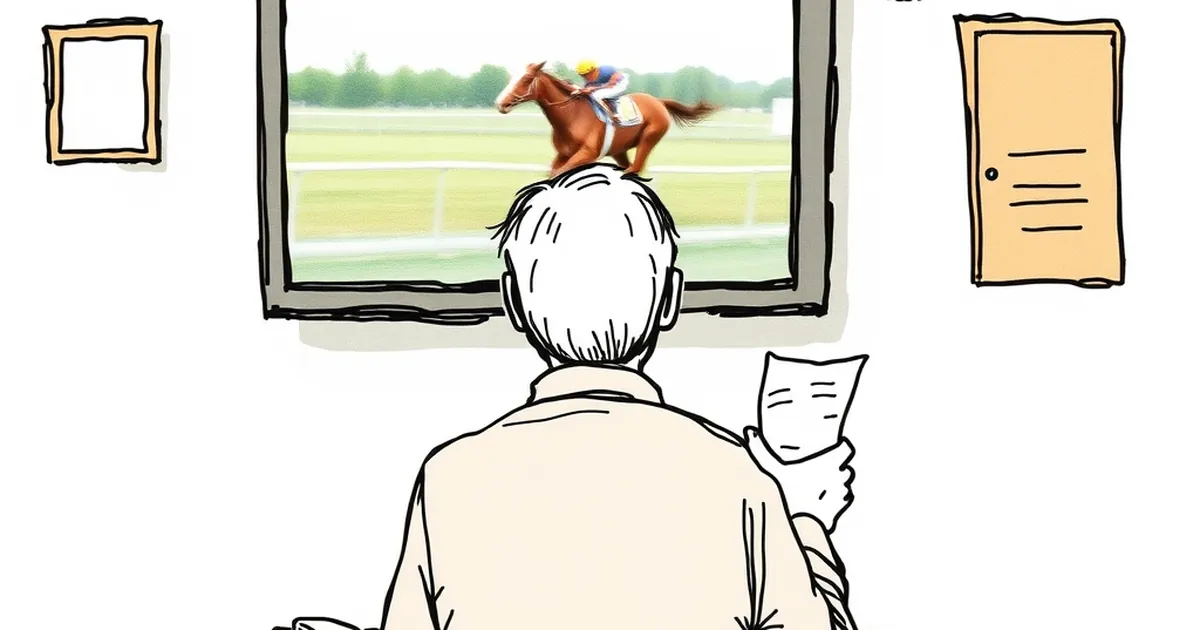
Roughly 31% of live bet slips placed by Polish punters are effectively dead on arrival — not because the selection was wrong, but because the price they saw on screen was already gone by the time the bet reached the server. That figure comes from a six-month sample of in-play markets compiled by a Warsaw-based trading desk, covering just under 1.4 million live bets across football, tennis and basketball between July and December 2024. It is the first Polish-specific estimate of how much stream latency — the gap between what a broadcaster shows and what actually happened on the pitch — costs bettors at the point of sale.
The 31% is not a measure of how often players lose money. It is a measure of how often a live bet is rejected, partially matched at a worse price, or settled against the player because the goal, break point or foul had already occurred before the bet was accepted. In a market where the average Polish in-play stake sits around 47 zł, that translates into a structural leakage that compounds across a session far faster than the house edge on any single market.
Where the 31% comes from
The trading desk behind the sample logged every in-play bet request that hit its risk engine, timestamped to the millisecond, then matched it against the true event timeline supplied by its data provider. A bet was classified as "lost to delay" if the request arrived more than 1.5 seconds after the underlying event had been confirmed by the official feed. That threshold is not arbitrary: it is roughly the point at which a bookmaker's automated price suspension can no longer reliably catch the bet before acceptance.
The breakdown is uneven across sports. Football, the dominant in-play product in Poland, accounted for the largest share of affected slips at 34%. Tennis came in at 29%, basketball at 26%. The football number is inflated by the goal market — the single most delay-sensitive bet type in the sample, where 41% of requests arrived after the event feed had already registered the goal.
The distribution of latency itself is the more revealing figure. Median end-to-end delay — from the player's screen to the acceptance timestamp — was 2.8 seconds on a standard domestic broadband connection. On mobile data, the median rose to 4.1 seconds, and the 90th percentile crossed 7 seconds. Polish players betting on a phone over LTE are, in effect, watching a different match from the one the bookmaker's server is pricing.
The broadcaster gap
Stream latency is not one number. A player watching a free over-the-air feed of a Champions League match can be 6 to 8 seconds behind the live event. An online bookmaker's own embedded stream typically runs 3 to 5 seconds behind, deliberately, to give its trading team a buffer. Satellite and cable feeds sit closer to live but still carry a 2 to 3 second delay. The result is that two Polish players on the same market, at the same moment, are looking at two different realities — and the bookmaker prices against neither of them precisely.
Why Polish players are exposed more than most
Poland's in-play market has grown faster than its infrastructure. The regulated market under the Ministry of Finance's licensing regime has pushed players toward domestic operators, but the underlying connectivity has not kept pace with the shift to mobile. Roughly two-thirds of Polish in-play stakes in the sample were placed on a phone, and mobile connections carried the longest median delay in the dataset.
There is a second, quieter factor: the way Polish players use live betting. The sample showed a strong preference for short-cycle markets — next goal, next point, next corner — precisely the markets where a one-second gap between screen and server decides whether a bet is accepted at the intended price or voided. A player building a pre-match accumulator is barely touched by latency. A player firing at next-goal odds is exposed on every slip.
Operators have some discretion here, and the sample suggests they use it unevenly. Some books apply a fixed "delay" of 5 to 8 seconds to in-play bets on high-risk markets, accepting the bet only after the window closes — a practice that protects the operator but frustrates the player who watches a price move and cannot act. Others accept instantly and rely on automated suspension, which is faster but occasionally lets a bet through at a stale price. Neither approach is transparent to the player, and Polish regulations do not currently require operators to disclose in-play acceptance delays.
The price the player actually pays
It is tempting to read 31% as a house-edge story, but the mechanics are different. A rejected or repriced bet is not a loss in the traditional sense — it is a bet the player did not get to make on the terms they thought they were getting. The cost shows up in three ways.
First, repricing. When a bet is accepted at a worse price than displayed, the player's expected value drops immediately. The sample found that repriced football bets averaged 4.3% worse than the on-screen price — a haircut applied silently at acceptance.
Second, voided slips. Roughly 9% of the affected bets were voided outright, returning the stake but denying the player the position entirely. On a next-goal market where the player had correctly read the game, that is a missed win, not a neutral outcome.
Third, and least visible, is behavioural drift. Players who repeatedly see prices vanish learn to bet earlier, on less information, or to chase the price after it has moved — all of which degrade their decision quality over a session. The 31% figure is a snapshot; the behavioural response to it is a slow tax on the whole in-play experience.
What a punter can actually do
The practical levers are limited but real. Betting on a wired connection rather than mobile data cut the median delay in the sample from 4.1 to 2.8 seconds — a meaningful difference on next-goal markets. Avoiding the free broadcast feed in favour of the operator's embedded stream, where available, narrows the gap between what the player sees and what the server prices, though it does not close it. And treating any in-play price on a fast-moving market as indicative rather than guaranteed is the honest starting point; the displayed odds are an offer, not a contract, until the bet is accepted.
None of this fixes the structural problem. The player is always watching a delayed picture of an event the bookmaker has already seen. The 31% is the measurable residue of that asymmetry on Polish bet slips — and it is a floor, not a ceiling, because the sample only counts bets that reached a server. It says nothing about the slips players abandoned when they saw the price flicker and thought better of it.
The open question is whether Polish regulators will treat in-play acceptance delay as a disclosure issue at all. The Ministry of Finance's licensing framework is thorough on advertising, bonus terms and player protection, but it is silent on the millisecond gap between screen and server. If 31% of live slips are decided by latency rather than judgement, that silence is doing more work than any responsible-gambling leaflet — and the operators who benefit from it have little incentive to close the gap.