November 2026
A 15% withdrawal fee costs more than the 24-hour wait
A 15% withdrawal fee quietly drains far more from Polish players than the 24-hour wait they complain about, and the cost compounds with every payout
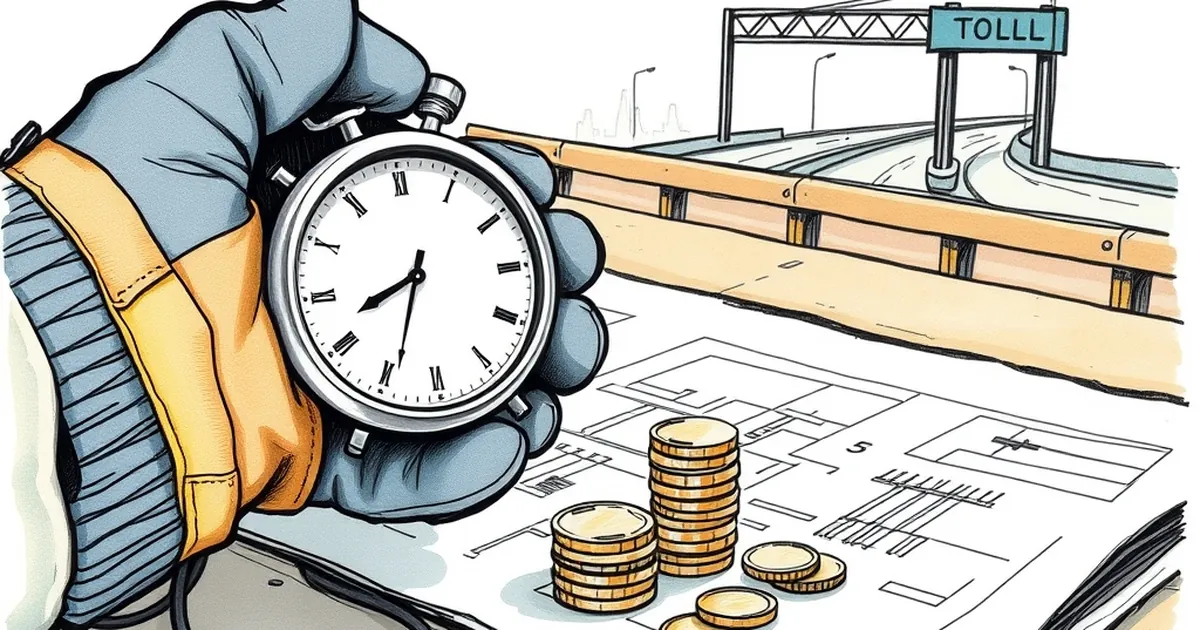
A player who withdraws 2,000 zł from an online casino four times a year pays roughly 1,200 zł annually in fees at a 15% rate — more than the entire balance of a typical welcome bonus and, over three years, more than the deposits of a casual player who spends 100 zł a week. The 24-hour pending period that Polish players complain about on forums costs them nothing but patience. The percentage fee on the way out costs them real money, every time, and it compounds.
The regulatory backdrop matters here. Poland's Ministry of Finance has been signalling changes to the gambling framework for some time, and the conversation in Warsaw has centred on blocking unlicensed operators and revising the 12% turnover tax that licensed bookmakers say makes them uncompetitive. What rarely enters the debate is the withdrawal fee — a charge that licensed and offshore operators both deploy, and one that is almost never disclosed in the headline bonus terms.
The arithmetic nobody runs before depositing
A 15% withdrawal fee is not a rounding error. On a 500 zł cashout it takes 75 zł. On 2,000 zł it takes 300 zł. A player who treats a casino as a weekly habit — deposit 100 zł on Friday, withdraw whatever survives to Monday — can find that the fee alone erodes their effective return faster than the house edge on most mid-variance slots.
Consider a player with a 97% RTP slot and a 15% exit fee. If they deposit 100 zł and run it through enough spins to lose 3% on average, they hold 97 zł. Withdrawing that 97 zł costs 14.55 zł, leaving 82.45 zł. The effective return on the deposit, once the fee is applied, is 82.45% — a figure no licensed slot in Poland comes close to matching on its own. The fee does more damage than the game does.
That comparison is the reason fee structures deserve more scrutiny than they get. Players routinely reject a slot with 94% RTP in favour of one at 96%, a difference of two percentage points. The same player will accept a 15% withdrawal fee without blinking, because it appears once, at the end, framed as an administrative cost rather than a deduction from winnings.
Where the 15% figure comes from
Not every operator charges 15%. The range across the market is wide: some casinos process withdrawals free, some charge a flat 10–30 zł, some apply 2–5%, and a smaller group applies percentage fees in the 10–20% band, sometimes with a minimum charge that bites hardest on small cashouts. A 15% fee with a 20 zł floor means a player withdrawing 80 zł pays 25%, not 15%. The floor is where casual players get hurt most, because their withdrawals are small and frequent.
Payment method matters too. Bank transfer withdrawals in Poland are frequently free at licensed operators; e-wallet and prepaid withdrawals more often carry a charge. A player who deposits by BLIK or card and withdraws to the same method usually faces a different fee schedule than one who withdraws to a wallet — and the fee is applied at the point of withdrawal, after the player has already committed the deposit.
The 24-hour wait is a product decision, not a cost
Pending periods exist for a reason operators rarely state plainly: they create a window in which a player can reverse the withdrawal and put the money back into play. Industry data has long suggested that a meaningful share of pending withdrawals are reversed, and that reversal rates rise with the length of the pending window. A 24-hour wait is not a processing limitation — most payment rails settle in minutes to hours. It is a retention mechanism.
From the player's perspective, the cost of the wait is opportunity and temptation, not cash. The cost of the fee is cash. Yet Polish player forums are full of complaints about the wait and comparatively quiet about the fee, because the wait is visible and annoying while the fee is buried in a terms page that most players read after the fact.
There is a regulatory angle. Under Polish law and EU consumer protection principles, material costs should be disclosed clearly before a consumer commits. A withdrawal fee qualifies as a material cost. Whether burying it in a general terms document satisfies that standard is an open question — and one that consumer advocates in other EU markets have begun to press.
What a fee actually does to a bankroll over a year
Take a player who deposits 400 zł a month, plays at a 96% RTP average, and withdraws whatever remains at the end of each month. Without a fee, the expected annual loss is 48% of 4,800 zł in deposits, or roughly 2,304 zł, and the player withdraws about 2,496 zł across the year.
Now apply a 15% withdrawal fee. The player still withdraws 2,496 zł in gross terms, but receives 2,122 zł. The fee has cost 374 zł — roughly 16% of the player's total annual deposits, or about 7.8% of everything they put in. Over five years that is 1,870 zł, enough to fund more than four months of the same habit.
The comparison to the 24-hour wait is stark. A player who waits 24 hours loses nothing but time. A player who pays 15% loses money on every single withdrawal, and the loss scales with how well they did. The better the session, the larger the absolute fee — a structure that penalises winning, which is the opposite of what a fair product should do.
The bonus trap that hides the fee
Many operators pair a percentage withdrawal fee with a welcome bonus that carries a wagering requirement. The player focuses on the wagering figure — 35x, 40x — and treats the fee as secondary. In practice the two compound. A player who clears a 500 zł bonus at 35x wagering turns over 17,500 zł. If they finish with 700 zł and withdraw it at a 15% fee, they receive 595 zł. The bonus has effectively been reduced by more than a fifth once the fee is applied.
This is the argument for reading the withdrawal section of the terms before the bonus section. The wagering requirement determines whether you can withdraw at all. The fee determines what you actually get when you do.
The disclosure gap
Polish-licensed operators publish fee schedules, but the presentation varies enormously. Some list withdrawal fees in a clear table on the payments page. Others reference them only in general terms and conditions, sometimes under a heading about "transaction processing" rather than "fees." A player comparing three casinos on bonus size and game selection may never see the fee until the first cashout.
Regulators in several EU jurisdictions have moved toward requiring fee disclosure in a standardised format at the point of deposit. Poland has not, at least not yet, and the Ministry of Finance's current reform agenda is focused elsewhere. Whether that changes depends on whether consumer complaints about withdrawal fees reach the same volume as complaints about blocked accounts and slow payments — and so far they have not.
The practical implication for players is straightforward: the fee schedule is the first thing to check, before the bonus, before the game library, before the licence number. A casino that charges 15% on withdrawals is not offering a better product than one that charges nothing, no matter how attractive the headline offer looks.
The open question is whether the market will correct on its own. Free withdrawals are a genuine competitive advantage, and operators that offer them tend to advertise the fact. But advertising works best when players are looking — and most players are looking at the bonus, not the exit. Until fee disclosure becomes standardised and prominent, the 15% charge will keep hiding behind a 24-hour wait that everyone complains about and almost nobody prices.